


Women Under Pressure: How the Warming Planet Affects Our Bodies?

An event about climate, women’s health, ecofeminism, and the NGO community

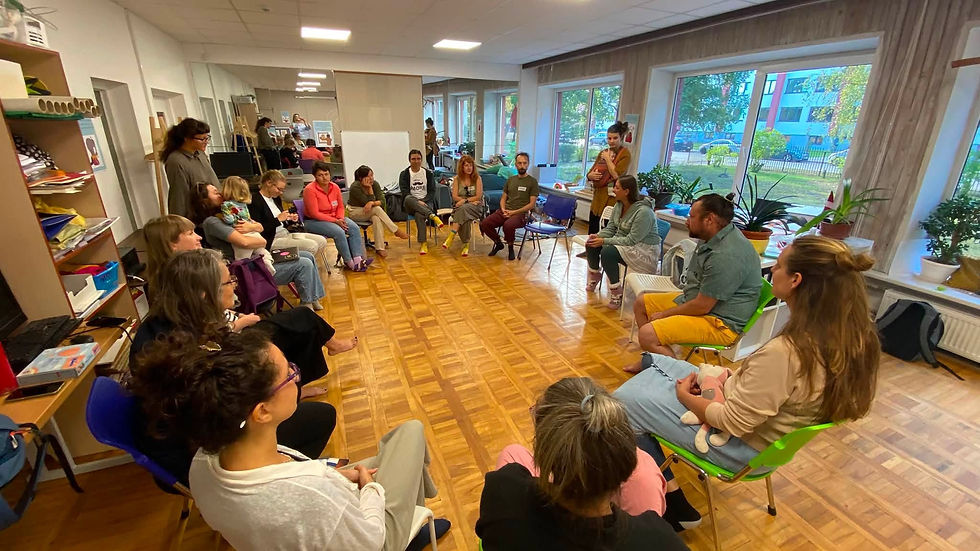
"WomanUp" Foundation and environmental association "Za Zemyata" (For the Earth) co-organized the event "Women Under Heat: How the Warming Planet Affects Our Bodies," which took place at SOHO coworking space in Sofia on October 16, 2026. The meeting brought together organizations working in the fields of climate, environment, and women's health. Following the round table, the event continued with a presentation from "Period Talks" series, focused on menstrual health.

During the discussion, we examined the current situation in Bulgaria regarding the changing climate, the availability of information on the subject, and the impact on women—specifically on their health and lifestyles.
We looked for answers to questions such as:
What changes are necessary at the local and national levels to address the impact of climate change on women's health?
What practical barriers prevent women from participating in decision-making processes, and how can their participation be ensured?
What measures can be taken over the next few years to tackle issues?
The discussion led to several key conclusions that helped us form a clearer picture of the current situation in our country. In Bulgaria, there is a need for more dialogue regarding ecofeminism and feminism in general. These concepts are not well understood, and there is a lack of available information in Bulgarian. Consequently, it is impossible to adequately account for the distinct needs of various social groups or to objectively assess how they are affected by climate change.

The feminist crisis in the country is a product of the patriarchal order—a mindset rooted in power, dominance, and control. The attitude and approach toward nature are identical to those toward women. Women are excluded from decision-making processes—at the local, institutional, and state levels—regarding matters that directly affect them, particularly concerning their health. The situation for women is generally more difficult because they are actively engaged in "care work"—tending to the home, the family, the household economy, and the provision of sustenance. For the most part, this care work goes unpaid; yet, at the same time, women do not personally own the households, farms, or other assets that they, in practice, maintain and support.

The round table was followed by the formation of working groups, in which participants continued to address the issues, discussing potential solutions and approaches. Together, we concluded that a core problem in Bulgaria lies in the field of education—specifically, the fact that the NGO sector is effectively excluded from the educational system. The NGO sector serves as a vital link between the public and state institutions, acting as a tool capable of exerting pressure on the government. Furthermore, if individuals within these institutions truly take these issues to heart, meaningful change becomes possible.
The event brought together a number of organizations actively engaged in areas such as the environment, women’s health (including menstruation, endometriosis, and reproductive health), ecology, and climate issues. We extend our gratitude for the responsiveness and partnership shown by the Bulgarian Platform of the European Women’s Lobby; the Bulgarian Biodiversity Foundation; the Health and Social Development Foundation (HESED); "Youth for a Green Future" Association; "Green Revolution" (Green Revolucia); Womeno; "Endometriosis and Reproductive Health" Foundation; "Independent" Foundation; Climate Rights Initiative.
The event is part of the project "Women for Green Justice: Advancing Gender Equality through Climate Action." This initiative is funded by the "Funding Fairer Futures" consortium and co-funded by the European Union. The content is the sole responsibility of the WomanUp Foundation and "Za Zemyata" (For the Earth) and does not necessarily reflect the views of the European Union.
Read more about the WomanUp Foundation project "Women for Green Justice" here.


Comments